Dossier, 26 November 2026
Image generation under HRX Loom on AMD GPUs
Four open image generators tested at 1024x1024 on a desktop AMD Radeon AI PRO R9700 and a Ryzen AI Max+ 395 mini-PC, with side-by-side image comparisons, speed, power, and memory trade-offs.
Between 25 and 26 November 2026 I tested four open-weights and source-available image models across two AMD machines. I wanted to see what runs well locally without Nvidia hardware, how fast compiled AMD kernels really are against standard PyTorch, and where image quality breaks.
On the desktop 32 GiB Radeon AI PRO R9700, AMD's HRX Loom 0.3.0 compiler cuts generation times to a few seconds. Fast 4-step drafts finish in 1.79 s, 8-step transparent stickers and icons finish in 6.13 s, and crisp 8-step scenes finish in 7.95 s. Standard CPU-offloaded PyTorch takes 34.77 s for those same transparent renders, or 8.93 s after shrinking model weights with 8-bit floating point.
Three practical trade-offs decide what fits where. First, fast Loom kernels for Qwen-Image-2.1 fill 30.51 GiB of the R9700's 31.86 GiB memory and generate text prompts only, so standard PyTorch (35.67 s) still handles photo edits and shared cards. Second, compact 8-bit integer compression causes PyTorch to fail silently into solid black squares on two of six test prompts. Third, keeping a Loom image server loaded next to a background language model on the unified-memory mini-PC pins the chip busy at 100% idle (44.2 to 54.8 W), while the desktop card drops back to 18 to 21 W between jobs.
Fastest draft
1.79 s
4-step FLUX.2 on R9700 Loom (0.44 kJ GPU draw)
Best scene adherence
7.95 s
8-step Krea 2 on R9700 Loom (29.05 s on mini-PC)
Direct transparency
6.13 s
8-step Qwen-2.1 Loom R9700 (27.09 s on mini-PC)
Practical photo edits
35.67 s
Qwen-2.1 offloaded (vs 357.2 s on SenseNova)
Setup
Two AMD machines, four models, and the test
I compared two very different AMD systems using Linux hardware sensors sampled four times a second. One machine is a desktop workstation card with fast dedicated video memory (VRAM), while the other is a compact mini-PC that shares slower system RAM between its processor and graphics chip.
| Machine | Memory and power envelope | Image software tested | What the power meter measures |
|---|---|---|---|
| Desktop workstation GPU (Linux) | AMD Radeon AI PRO R9700 (64 compute units, 31.86 GiB dedicated GDDR6 VRAM, 300 W board cap, PCIe 5.0, RDNA 4 gfx1201) | hrx-loom 0.3.0 compiled runtime; PyTorch 2.13.0+rocm10.1 with diffusers 0.44.0.dev0 | PCIe graphics board power only (18.0 to 21.4 W warm idle). Excludes CPU and host RAM during offload |
| Unified memory mini-PC (Linux) | AMD Radeon 8060S (40 compute units, 116.9 GiB unified LPDDR5x GPU pool, ~120 W shared cap, RDNA 3.5 gfx1151) | hrx-loom 0.3.0 compiled runtime; PyTorch 2.13.0+rocm10.1 with diffusers 0.44.0.dev0 | Whole-chip APU power sensor (14.3 to 29.3 W with background LLMs loaded). Combines CPU and GPU together |
I keep board power on the desktop card separate from total chip power on the mini-PC rather than guessing wall conversion factors. Under PyTorch CPU offload (--offload model), the large text encoder sits in host RAM and copies layers over PCIe on every request. That leaves the R9700 waiting on data and draws just 87.8 W on the card while the host CPU works off-meter.
| Model | How it is built | Passes / guidance | Disk size | Prompt limit | Transparency | Image editing | License |
|---|---|---|---|---|---|---|---|
FLUX.2 [klein] 4B | BF16 flow-matching model + Qwen3 text encoder | 4 steps / CFG 1 | 15.98 GB | 512 tok | Solid RGB | No | Apache-2.0 |
Krea 2 Turbo | Rotated INT8 weights + BF16 text and decoder | 8 steps / CFG 1 | 22.89 GB | 512 tok | Solid RGB | No | Krea license |
Qwen-Image-2.1-Turbo | Qwen3-VL-8B encoder + 60-block transformer + cutout VAE | 8 steps / CFG 1 | 32.45 GB | 4,096 / 61k | Native RGBA | Diffusers only | Apache-2.0 |
SenseNova-U1.6-8B-MoT | Mixture-of-Transformers (Q8 understanding + BF16 image path) | 50 steps / CFG 4 | 41.42 GB | Long prompt | Solid RGB | Loom edit-1mp | Apache-2.0 |
Image generators turn random static into a picture across a fixed number of denoising steps. Four-step models prioritize speed for quick drafts, while 50-step models take much longer trying to refine fine detail. Meanwhile, Loom's elastic memory setting loads weights lazily and starts under 1 s, whereas its fixed setting locks the whole parameter pool at boot for steady timing.
Visual results
Comparing the generated images side by side
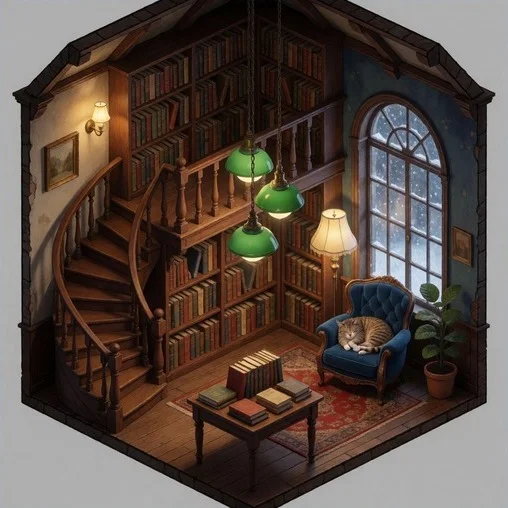
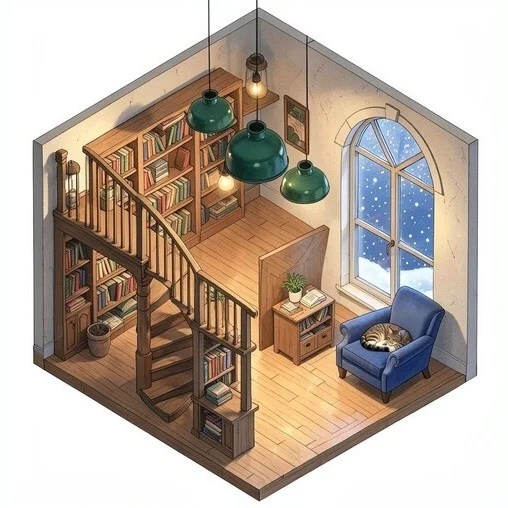
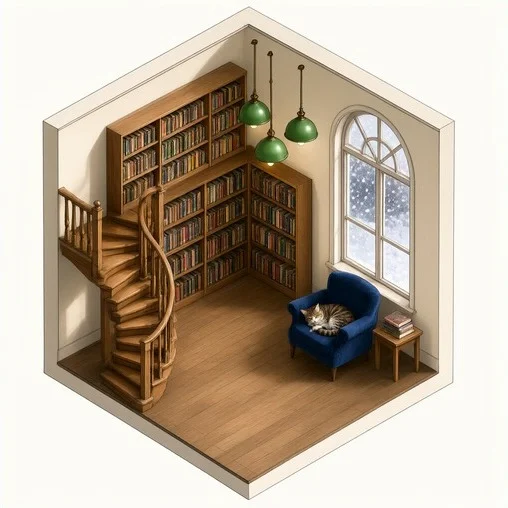
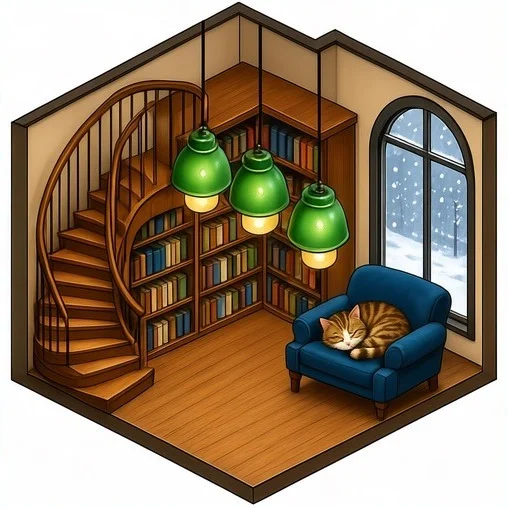
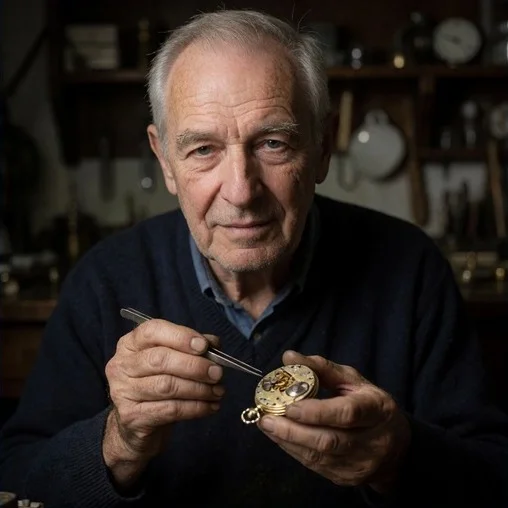
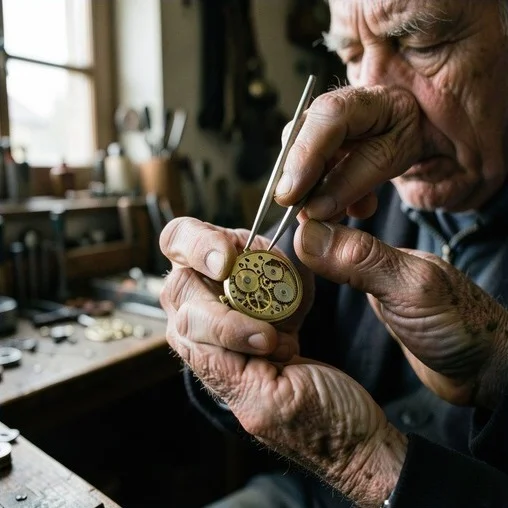
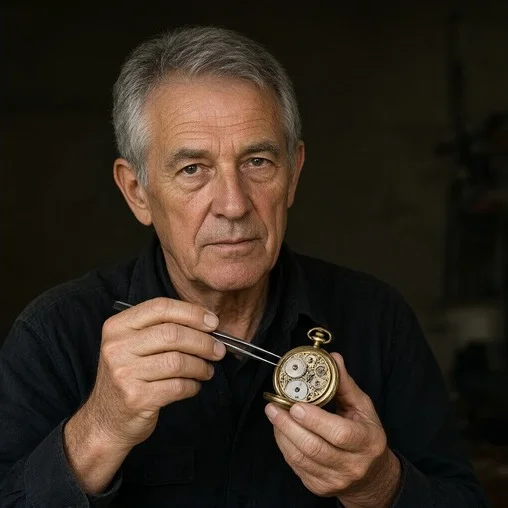
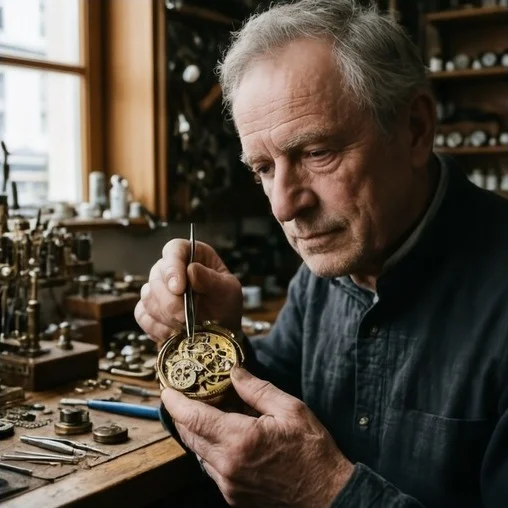
Speed numbers mean little without seeing the pictures. Every model answered six fixed 1024x1024 text prompts (a matte cube, cafe chalkboard, watchmaker portrait, isometric bookstore, server rack vector art, and alpine train viaduct) plus two reference photo edits and a 20-unit game sprite sheet.
Prompt 4, an isometric two-story bookstore with three green lamps and a sleeping cat
Prompt 3, an older Zurich watchmaker holding brass gears with tweezers
| Prompt or edit | FLUX.2 [klein] 4B | Krea 2 Turbo | Qwen-Image-2.1-Turbo | SenseNova-U1.6-8B-MoT |
|---|---|---|---|---|
| P1 Red cube | Clean shadow, warm orange-red tint | Strongest studio contrast and oak texture | Neutral matte cube in both Loom and Diffusers | Slightly pink face, busy wood grain |
| P2 Cafe menu chalkboard | Exact text and prices, thinner chalk | Exact menu text and warm brick depth | Exact spelling and tidy alignment | Exact text, flatter synthetic light |
| P3 Watchmaker portrait | Third hand fused into watchmaker's nose | Best candid gaze and workbench depth | Natural five-finger hand, crisp tweezers | Softer waxy skin compared with Krea |
| P4 Isometric bookstore | Real two-story gallery, extra bulb | Best two-story balcony + 3 green lamps | Missed upper floor, dead-end staircase | Single-floor cartoon room |
| P5 Technical vector | Purest flat 2D line style | Detailed rack readout and amber fibers | Shaded isometric vector workstation | 3D shaded cabinet rather than flat art |
| P6 Alpine viaduct | Short train, clean rock detail in 4 steps | Best curved bridge and valley mist | Sharp tunnel cliff and morning sun | Heavy HDR glow, long train span |
| E1 / E2 Photo edits | Not supported | Not supported | Clean cube recolor and train edit (35.7 s) | Clean cube recolor, clipped white sky (357.2 s) |
Compiled Loom matches PyTorch pixels and produces clean transparent cutouts
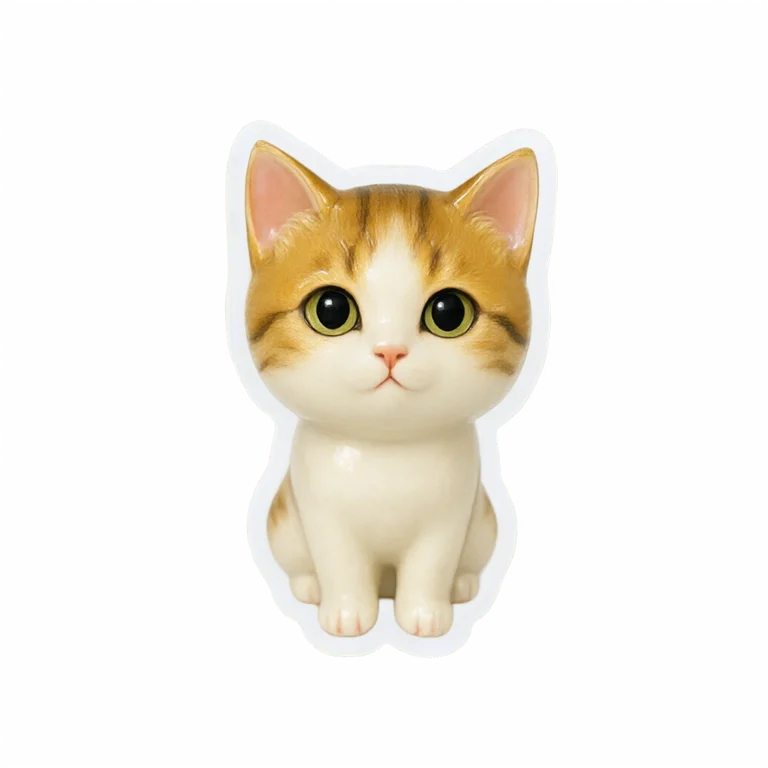
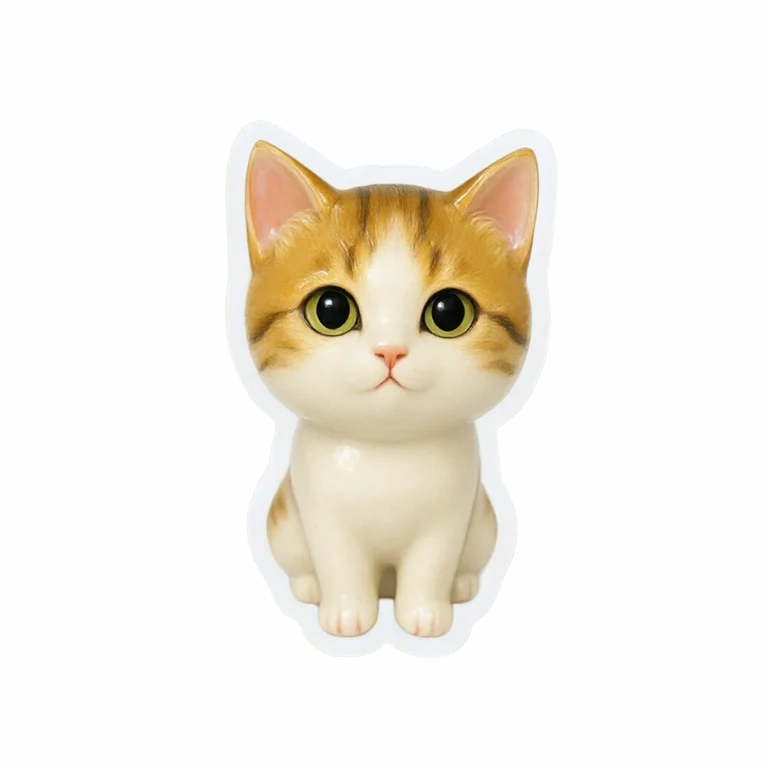
Before trusting speed gains from a custom GPU compiler, I checked whether my compiled Qwen-2.1 Loom build gave the same pictures as reference PyTorch. Feeding the exact same initial random noise into both engines lets me measure pixel similarity (PSNR, where anything above 30 dB looks nearly identical by eye). Across twelve varied cases, compiled Loom averaged 38.17 dB for color and 66.59 dB for transparency masks.


| Comparison pair | How outputs were aligned | Similarity (PSNR / SSIM) | Visual outcome |
|---|---|---|---|
Qwen-2.1 Loom vs PyTorch BF16 | Same random noise across 12 cases (256px to 1344px + sticker) | 38.17 dB color / 66.59 dB alpha | Cutout borders and fine wood textures match closely |
Qwen-2.1 mini-PC Loom vs PyTorch BF16 | Same 12-case noise check on RDNA 3.5 (gfx1151) | 36.35 dB color / 65.44 dB alpha | 0.9775 SSIM across all 12 RGBA cases |
Qwen-2.1 Diffusers FP8WO vs BF16 | Same noise, weights compressed to per-row 8-bit float | 27.37 dB color / 0.9054 | 8/8 clean test prompts and 2/2 clean edits |
Qwen-2.1 Diffusers INT8WO vs BF16 | Same noise, weights compressed to per-row 8-bit integer | 31.58 dB color / 0.9466 | Clean on the 12-case check, but 2/6 fleet prompts turned black |
FLUX.2 R9700 vs mini-PC Loom | Identical seed and scheduler across two GPU generations | 32.08 dB (cube), 17.4 to 24.2 dB | Matches layout and spelling, minor BF16 texture shift |
Krea 2 R9700 vs mini-PC Loom | Identical seed and scheduler across two GPU generations | 29.71 dB (cube), 17.6 to 24.4 dB | Matches style and slate text across all six prompts |
SenseNova Loom vs published BF16 | Vendor reference outputs for cube and edit tasks | 44.67 dB (cube), 36.48 dB (edit) | Accurate cube recolor, harsh sky blowout on alpine edit |
Qwen-2.1 edits photos cleanly, while 50-step SenseNova blows out highlights
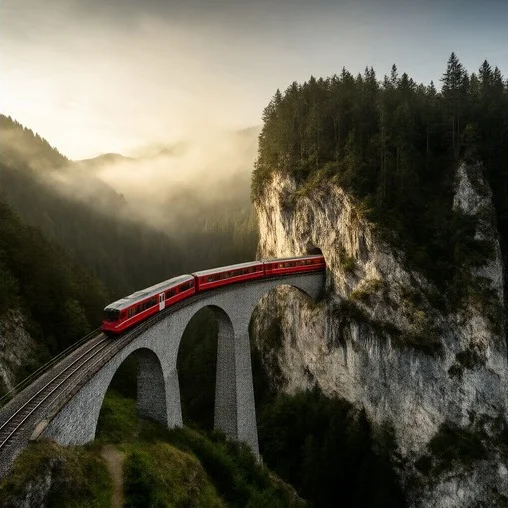
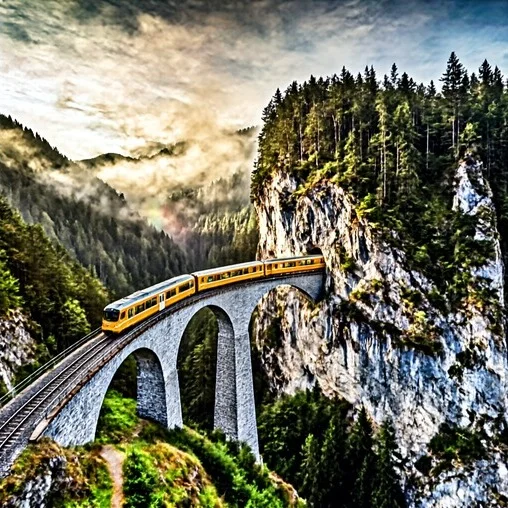
Only Qwen-Image-2.1-Turbo (running under PyTorch Diffusers) and SenseNova (running under Loom) accept a reference picture alongside an editing prompt today. Asked to turn the red Swiss train yellow and add a valley rainbow without altering the cliffs, offloaded Diffusers took 34.46 s and preserved the rock texture cleanly. Compressing Qwen-2.1 to 8-bit FP8 held the same geometry at 37.82 s, whereas SenseNova spent 356.32 s and posterized the clouds and trees.
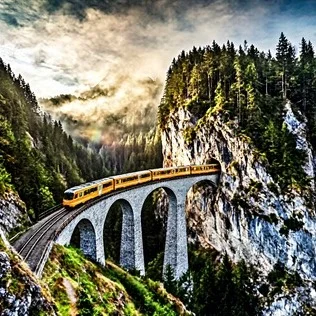
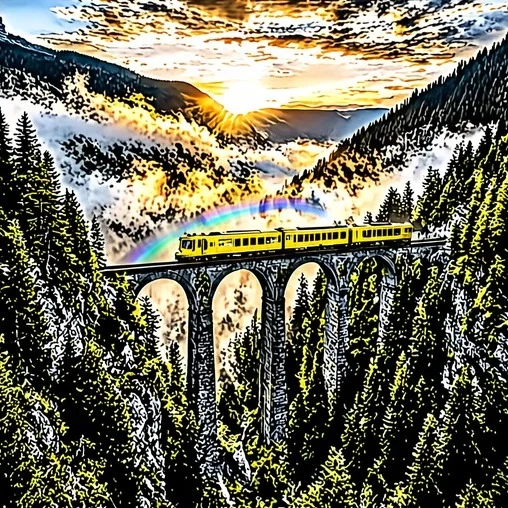
Krea 2 on R9700 builds a 20-unit game sprite sheet four times faster
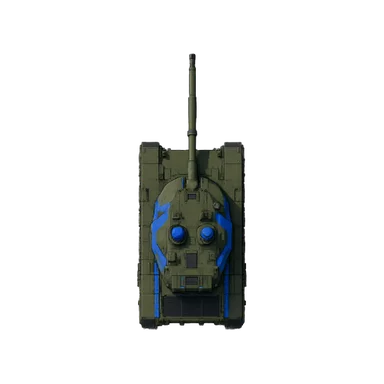
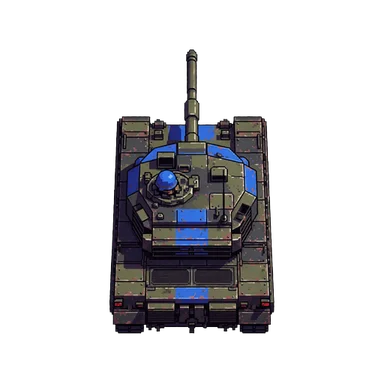
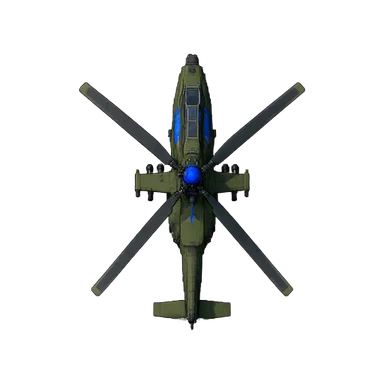
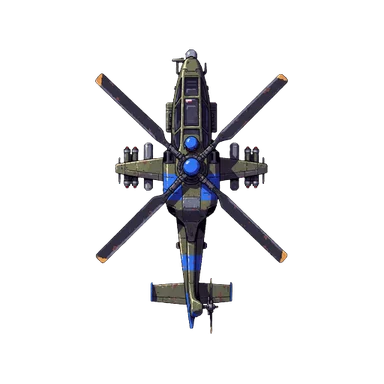
I also ran a practical asset-creation loop generating 20 top-down strategy game units (infantry squads, tanks, helicopters, jets, drones, and missile trucks at 512x512). Diffusers Qwen-2.1 has built-in transparent backgrounds and understands style-reference images, so unit colors stayed uniform without extra cleanup. Because each call took 30 to 39 s and needed 32 attempts to keep cameras strictly top-down, that run took nearly 20 minutes of GPU time.
Switching to patched R9700 Loom Krea 2 cut generation down to 8.40 to 8.69 s per unit, finishing the entire 20-unit batch (including a 3-unit pilot and 7 rerolls) in roughly four minutes of active GPU time and 7.3 minutes wall clock. Because Krea does not emit transparency natively, I generated on bright magenta backdrops and stripped tinted ground shadows with an automated flood-fill and edge-unmixing pass.
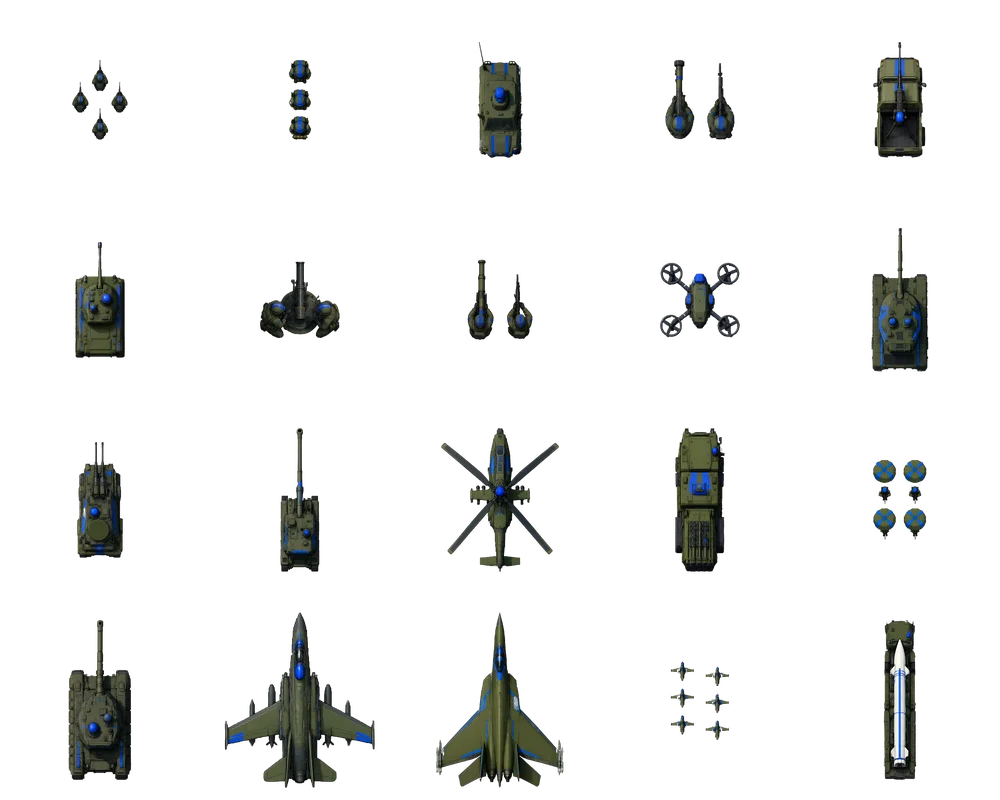
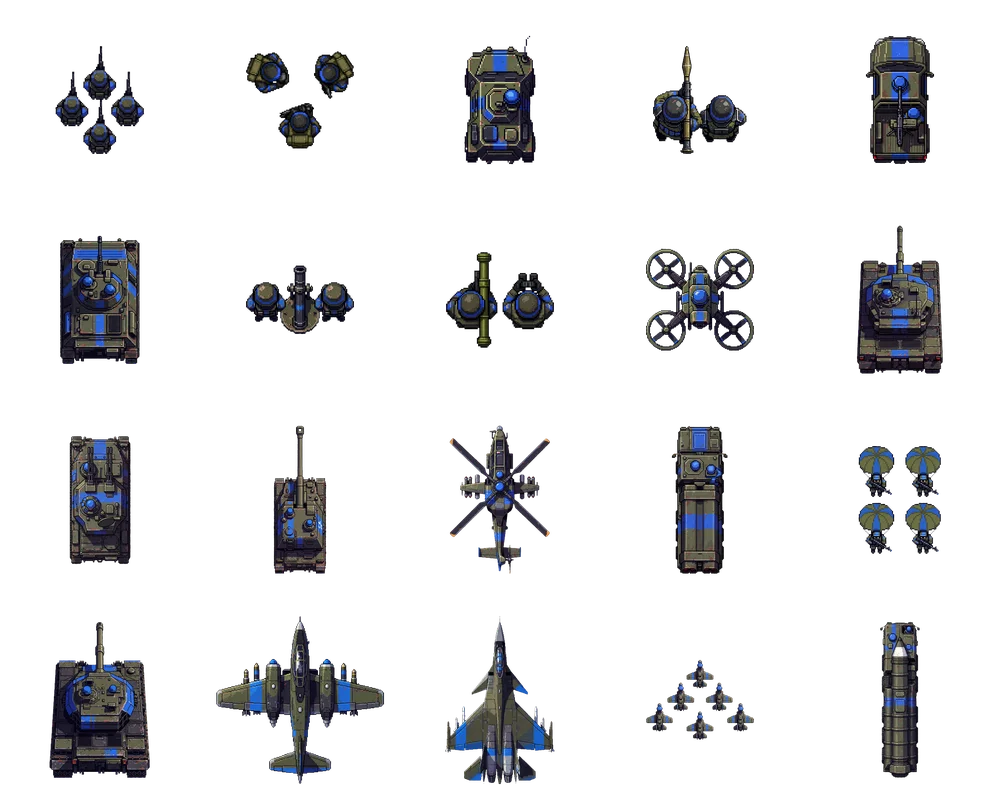
| Sprite run | Runtime and GPU | Time per unit | Total calls | Cutout method | Main takeaway |
|---|---|---|---|---|---|
| Qwen-Image-2.1-Turbo | R9700 Diffusers offload | 32.9 s mean (30.0 to 38.5 s) | 32 calls | Built-in RGBA output | Accepted style reference images cleanly, slower turn-around |
| Krea 2 Turbo (patched) | R9700 Loom 0.3.0 | 8.40 to 8.69 s (post-pilot) | 28 calls (~4 min GPU) | Magenta backdrop + hue cutout | Finished 20 units in 7.3 min wall time with bolder edges |
Scoreboard
Speed, energy cost, and memory limits
Three hardware effects explain the gap between runs. First, moving from the mini-PC's shared LPDDR5x memory to dedicated 256-bit GDDR6 on the R9700 speeds FLUX.2 up 3.76x, Krea 2 up 3.65x, and rotated Qwen-2.1 Loom up 4.33x (6.25 s vs 27.09 s) while cutting GPU energy 40% to 46%. Under the mini-PC's 120 W cap, FLUX.2 also swings from 9.00 s down to 5.50 s depending on text complexity, whereas the 300 W desktop card holds within 15 ms.
Second, compiled Loom kernels eliminate CPU-offload stalls on the desktop card (5.67x faster than offloaded PyTorch at 6.13 s vs 34.77 s), while on the unified-memory mini-PC un-offloaded Diffusers (--offload none, 42.51 GiB) matches Loom BF16 (30.70 GiB) on warm latency at 27.03 s vs 27.09 s because nothing crosses a PCIe bus. Even there, Loom uses 11.8 GiB less memory and starts 17.5x faster (0.63 s vs 10.99 s). Third, 50-step SenseNova spends roughly 180x the time and energy of 4-step FLUX.2 on identical hardware.
| Model arm | Machine and runtime | Memory mode | Ready | 1st run | Warm mean | Range | Avg / Peak W | Energy / img | Idle / Peak mem | Temp / Fan | Repeat |
|---|---|---|---|---|---|---|---|---|---|---|---|
| FLUX.2 [klein] 4B (patched) | R9700 / Loom 0.3.0 | elastic | 0.43 s prep | 2.71 s | 1.79 s | 1.78 to 1.79 s | 244.8 / 301 W | 0.44 kJ (0.12 Wh) | 13.17 / 16.67 GiB | 109 C junc / 2,364 RPM | 3/3 SHA |
| Qwen-Image-2.1-Turbo T2I | R9700 / Loom BF16 | fixed | 0.95 s ready | 7.73 s | 6.13 s | 6.04 to 6.19 s | 268.0 / 308 W | 1.64 kJ (0.46 Wh) | 27.88 / 30.51 GiB | 110 C junc / 4,765 RPM | 3/3 SHA |
| FLUX.2 [klein] 4B (stock) | Strix Halo / Loom 0.3.0 | elastic | 19.8 s place | 25.35 s | 6.72 s | 5.50 to 9.00 s | 107.8 / 120 W | 0.73 kJ (0.20 Wh) | +16.7 GiB (103.3 GiB sys) | 86 C edge (APU) | 3/3 repeat |
| Krea 2 Turbo INT8 (patched) | R9700 / Loom 0.3.0 | elastic | 0.67 s ready | 9.07 s | 7.95 s | 7.65 to 8.71 s | 269.0 / 295 W | 2.14 kJ (0.59 Wh) | 20.20 / 22.51 GiB | 110 C junc / 5,039 RPM | 3/3 SHA |
| Qwen-Image-2.1-Turbo T2I (FP8) | R9700 / Diffusers + torchao | FP8WO resident | 50.84 s ready | 8.94 s | 8.93 s | 8.87 to 8.97 s | 287.4 / 321 W | 2.57 kJ (0.71 Wh) | 17.39 / 28.43 GiB | 108 C junc / 4,698 RPM | 3/3 SHA |
| Qwen-Image-2.1-Turbo T2I | Strix Halo / Diffusers ROCm | offload=none | 10.99 s ready | 36.38 s | 27.03 s | 25.22 to 30.30 s | 116.7 / 120 W | 3.15 kJ (0.88 Wh) | 30.73 / 42.51 GiB sys | 89 C edge (APU) | 3/3 SHA |
| Qwen-Image-2.1-Turbo T2I | Strix Halo / Loom BF16 | fixed | 0.63 s ready | 27.90 s | 27.09 s | 25.44 to 28.44 s | 113.5 / 119 W | 3.07 kJ (0.85 Wh) | 28.08 / 30.70 GiB sys | 90 C edge (APU) | 3/3 SHA |
| Krea 2 Turbo INT8 (stock) | Strix Halo / Loom 0.3.0 | elastic | 67.3 s place | 94.83 s | 29.05 s | 27.65 to 32.70 s | 116.5 / 120 W | 3.38 kJ (0.94 Wh) | +22.6 GiB (109.1 GiB sys) | 84 C edge (APU) | 3/3 repeat |
| Qwen-Image-2.1-Turbo T2I | R9700 / Diffusers ROCm | offload=model | 91 s place | 38.69 s | 34.77 s | 31.98 to 38.69 s | 87.8 / 305 W | 3.04 kJ (0.85 Wh) | 1.74 / 17.31 GiB | 110 C junc / 1,746 RPM | 3/3 SHA |
| Qwen-Image-2.1-Turbo Edit | R9700 / Diffusers ROCm | offload=model | warm cache | none | 35.67 s | 34.46 to 36.89 s | 102.4 / 279 W | 3.65 kJ (1.01 Wh) | 0.77 / 22.98 GiB | 110 C junc / 1,906 RPM | n=2 edits |
| Qwen-Image-2.1-Turbo Edit (FP8) | R9700 / Diffusers + torchao | FP8WO resident | warm cache | none | 38.60 s | 37.82 to 39.38 s | 147.9 / 308 W | 5.71 kJ (1.59 Wh) | 17.39 / 30.28 GiB | 108 C junc / 4,678 RPM | n=2 edits |
| SenseNova-U1.6-8B T2I | R9700 / Loom 0.3.0 | fixed | 1.73 s ready | 318.40 s | 317.0 s | 316.78 to 317.26 s | 247.3 / 351 W | 78.40 kJ (21.78 Wh) | 25.64 / 26.12 GiB | 112 C junc / 3,817 RPM | 2/2 repeat |
| SenseNova-U1.6-8B Edit | R9700 / Loom 0.3.0 | fixed | 0.50 s prep | none | 357.2 s | 356.32 to 358.15 s | 249.3 / 364 W | 89.07 kJ (24.74 Wh) | 25.67 / 26.80 GiB | 113 C junc / 5,146 RPM | n=2 edits |
Warm 1024x1024 latency across all thirteen arms (log scale)
Desktop R9700 idle-loaded against active peak VRAM (31.86 GiB usable card limit)
Mini-PC idle power latch and desktop blower noise
Starting an image worker on the unified-memory mini-PC while a background language model was already resident (86.6 GiB allocated) pinned gpu_busy_percent at 100% even when idle. Power jumped from 14.3 to 29.3 W up to 44.2 W after Krea (+21.4 GiB memory) and 54.8 W after FLUX.2 (+16.7 GiB) until unloaded, whereas standalone Qwen-2.1 Loom with no background LLM settled at 28.1 W (Diffusers 35.0 W). The desktop R9700 returned cleanly to 18.0 to 21.4 W after every burst, though continuous Loom workloads spin its radial blower to 4,765 to 5,039 RPM at 110 C hotspot while CPU-offloaded Diffusers stays whisper-quiet at 1,746 to 1,906 RPM.
Picking a setup
Which runtime and model to pick
Plotting generation speed against energy per image separates compiled Loom runs on the R9700 from mini-PC jobs and offloaded PyTorch cleanly.
Use R9700 HRX Loom when
- Speed and rapid iteration matter most, where 4-step FLUX.2 delivers 33 images a minute (1.79 s each) and 8-step Krea 2 finishes in 7.95 s while returning to 18.0 W idle.
- You need transparent
RGBAcutouts on an Apache-2.0 checkpoint and can dedicate a 32 GiB GPU to hold 30.51 GiB for Qwen-2.1 Loom (6.13 s, 38.17 dB exactness). - Complex multi-floor layouts, signage, and moody contrast matter more than sub-2-second drafts (use patched Krea 2 Turbo).
Keep Diffusers or the mini-PC when
- You need reference-image edits today, where CPU-offloaded Diffusers Qwen-2.1 finishes in 35.67 s with intact HDR highlights and 36% lower GPU energy than resident FP8WO (38.60 s) or 357.2 s SenseNova.
- Other services must share the 32 GiB R9700 VRAM alongside image generation, making offloaded Diffusers (1.74 GiB idle, 17.31 GiB T2I peak) far easier to co-host than 30.51 GiB fixed Loom.
- Dedicated desktop cards are tied up serving interactive chat models, moving batch renders to the unified-memory mini-PC at 6.72 s (FLUX.2), 27.09 s (Qwen-2.1 RGBA), or 29.05 s (Krea 2).
Under the hood
Why stock packages broke on RDNA 4 and what fixed them
None of these fast R9700 numbers worked out of the box. Stock FLUX.2 and Krea 2 Loom packages targeted older RDNA 3 chips and crashed at startup on RDNA 4 because AMD changed how wave32 matrix instructions lay out inputs and outputs across GPU threads. Meanwhile, Qwen-Image-2.1-Turbo had no Loom package at all, so I wrote new RDNA 4 BF16 kernels from scratch, extended them with dual-target RDNA 3.5 (gfx11) wave32 matrix templates for the 27.09 s mini-PC baseline (published at roundhouse-is/Qwen-Image-2.1-Turbo-loom), and benchmarked 8-bit PyTorch compression as an alternative.
Rewriting the broken matrix instructions across 17 IR files in FLUX.2 and 27 files in Krea 2 fixed both stock bundles with zero compiler warnings. For Qwen-2.1, four targeted kernel optimization rounds then cut 1024x1024 generation time 2.74x from 16.76 s down to 6.11 s (6.13 s in the fleet suite and 6.25 s across 27 rotated HTTP runs).
| Round | Kernel work on R9700 | 9-case mean | Speedup | Microbenchmark gain | Visual parity |
|---|---|---|---|---|---|
| R0 | Initial BF16 IR with basic 64x64 matmul and scalar VAE | 16.756 s | 1.00x | conv3x3 1,908.9 ms/img | 38.47 dB color / 66.39 dB alpha |
| R1 | Wide 256x128 matmul kernel (0 register spills) | 8.416 s | 1.99x | 99.4 TFLOPS on 4096x4096 | Bit-exact vs R0 |
| R2 | Vectorized NHWC decoder convolutions and norms | 6.904 s | 2.43x | conv3x3 5.31x faster (359.6 ms) | 54.19 dB standalone VAE |
| R3 | Transposed RDNA 4 FlashAttention-2 | 6.283 s | 2.67x | Attention 1.53x faster (4.52 ms) | Passes reference oracle |
| R4A+B | Fused head norm + rotary embedding and centered vec8 norm | 6.110 s | 2.74x | Norm+RoPE 2.06x, LN 2.02x | 38.17 dB / 0.9901 SSIM |
What happens when you compress PyTorch Diffusers to 8 bits instead
Rather than writing custom GPU kernels, an easier idea is shrinking Qwen-2.1's weights from 16 bits down to 8 bits so the whole pipeline fits inside 31.86 GiB VRAM without CPU offloading. I tested five resident Diffusers variants on the R9700. Unscaled Diffusers FP8 storage either still ran out of memory at 31.82 GiB or collapsed into NaN noise inside the 60-block transformer, and dynamic FP8 activations hit an MI300+ hardware check.
Adding per-row weight scales with torchao 0.18.0 fixed storage inside 16.80 GiB of allocated weights. Weight-only 8-bit floating point (Float8WeightOnlyConfig) ran 3.89x faster than CPU offload at 8.93 s and produced valid images across every T2I and Edit test. Weight-only 8-bit integers (Int8WeightOnlyConfig) averaged 7.66 s and scored higher on the 12-case check, but silently overflowed into solid-black 4,144-byte PNGs on two of six prompts (chalkboard menu and alpine viaduct).
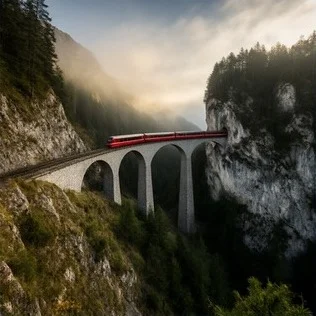
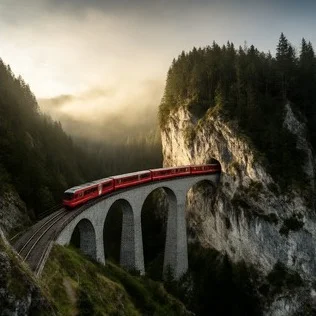

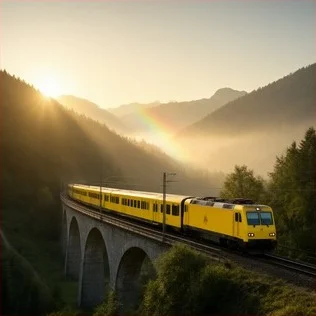
FP8WO) keeps both T2I and photo edits intact. Uniform INT8 (INT8WO) turns Prompt 6 solid black, forcing the follow-up train edit to invent a brand-new mountain scene from scratch.| Resident PyTorch setup | Where weights are shrunk | Ready | Idle / Peak VRAM | 12-case oracle | T2I mean | Edit mean | Verdict |
|---|---|---|---|---|---|---|---|
fp8_enc_bf16_dit | Diffusers unscaled FP8 encoder, BF16 DiT | 36.95 s | 22.98 / 31.82 GiB | HTTP 500 | skipped | skipped | Ran out of VRAM on first image |
fp8_cast_all | Diffusers unscaled FP8 encoder + DiT | 22.70 s | 16.47 / 27.23 GiB | 4.22 dB (failed) | skipped | skipped | NaN collapse without per-row scales |
torchao_fp8dq | Dynamic FP8 activations + weights | failed | none | blocked | skipped | skipped | Blocked on non-MI300+ AMD GPUs |
torchao_int8wo | Per-row Int8WeightOnlyConfig TE + DiT | 49.63 s | 17.39 / 28.43 GiB | 31.58 dB / 0.9466 | 7.66 s nominal | 37.68 s | Unreliable, 2/6 fleet prompts black NaN |
torchao_fp8wo | Per-row Float8WeightOnlyConfig TE + DiT | 50.84 s | 17.39 / 28.43 GiB | 27.37 dB / 0.9054 | 8.93 s (2.57 kJ) | 38.60 s (5.71 kJ) | Works cleanly across all 8 T2I + 2 edits |
Removing CPU offload still does not speed up single-reference photo editing. Attaching a reference image doubles the token sequence from 4,096 to 8,192 tokens, pushing resident FP8 peak VRAM from 28.43 GiB up to 30.28 GiB (and 31.15 GiB under INT8). Near the 31.86 GiB ceiling, PyTorch allocator churn throttles average board draw down to 147.9 W and stretches each edit to 38.60 s (5.71 kJ), slightly slower and 56% hungrier for GPU energy than keeping --offload model (35.67 s, 3.65 kJ).
Kernel engineering notes (WMMA lane layouts, variance precision, and ROCm MIOpen traps)
- RDNA 3 to RDNA 4 matrix instruction changes. Stock RDNA 3 bundles expected 16-element duplicated operands and interleaved accumulator rows (
row = 2*e + half). My deterministic patcher updated 17.loomfiles in FLUX.2 (60 kernels compiled in 0.23 s) and 27 files in Krea 2 (147 kernels in 0.81 s) to RDNA 4's split K operands (vector<8xbf16>or INT8vector<2xi32>) and contiguous 8-row halves (row = 8*half + e), shrinking Krea's wave64attention_expanded.loomfromvector<16xbf16>tovector<4xbf16>while leaving Krea global-to-LDS loads intact insideimage_attention_matrix.loom. See the Inkling 2 Mini report for full register diagrams. - Qwen-2.1 numerical pitfalls caught by oracle checks. First, matching PyTorch's BF16 timestep rounding
(sigma * 1000.0).to(torch.bfloat16) / 1000.0cleared denoising color drift at Round 0. Second, replacing two-pass variance with single-passE[x^2] - E[x]^2inside@layernorm_scale_4096_bf16lost 1.0 to 2.7 dB across 60 blocks. Holding fourvector<8xbf16>register vectors for two-pass centeredE[(x - mean)^2]restored +3.53 dB on 768x1344 RGB and +3.27 dB on sticker alpha at the same 2.02x speedup. - MIOpen cold-start bug and
torchaoscaling scope on RDNA 4. Default PyTorch with cuDNN enabled fails to locate a missinglibMIOpenCKGroupedConv_gfx1201.sofile on call one (returning a 4.21 dB NaN image in 18.7 s before working on call two), so every resident run settorch.backends.cudnn.enabled = Falseand ran a 256x256 startup warmup. Meanwhile,torchaoraises an arch guard on dynamic FP8 (_scaled_mmrequiresCUDA>=8.9or MI300+), so weight-only arms dequantize stored 8-bit rows back to BF16 per linear layer (divisible by 16, skipping projections and norms).
Limits
What these runs do not prove
- Two different power meters. R9700
hwmonreads GPU board watts only and misses CPU and host memory power while Diffusers streams offloaded weights. Mini-PChwmonreads total APU socket power, and every energy number is gross sensor energy rather than idle-subtracted work. - Tight memory and scope in Qwen-2.1 Loom. Unlike Krea 2's INT8 rotated weights, my initial Qwen-2.1 Loom port stores BF16 weights throughout (30.51 GiB peak out of 31.86 GiB on R9700; 30.70 GiB total unified memory on the mini-PC) and supports text-to-image only. Reference image edits and 8-bit Loom quantization remain open work.
- Uncalibrated PyTorch quantization filters. Uniform
torchaoINT8 and FP8 filters were applied without per-layer sensitivity calibration. Skipping unstable transformer blocks could likely cure INT8's two black frames, though T2I would still trail compiled Loom BF16 and edits would hit the same 31.86 GiB wall. - Single-stream batches and PRNG mismatch. All runs ran at concurrency 1. Unaligned HTTP comparison between Loom and Diffusers drops PSNR to 10.3 to 16.8 dB purely because Loom uses Philox4x32-10 noise while Diffusers uses PyTorch's RNG, so exact fidelity rests on the 12-case shared-noise oracle (38.17 dB RGB / 66.59 dB Alpha on R9700; 36.35 dB / 65.44 dB on the mini-PC).
- Local patches versus stock vendor cards. FLUX.2 and Krea R9700 numbers used my deterministic IR patcher on unmodified HRX Loom 0.3.0 rather than an official vendor release, Qwen-2.1 Loom used my dual-target RDNA 4 and RDNA 3.5 BF16 package (roundhouse-is/Qwen-Image-2.1-Turbo-loom), and SenseNova used its published R9700 package.
Sources
What this leans on
- Black Forest Labs, FLUX.2 [klein] 4B (revision
e7b7dc27f91d, Apache-2.0), and the Loom model card, for the 4-step BF16 flow-matching package. - Krea AI, Krea-2-Turbo (revision
98e0fe118d17, Krea 2 Community License), Comfy-Org/Krea-2 (revision1171f4dc7e32INT8 Hadamard-256convrotDiT), and the HRX Loom library card, for the 8-step INT8 package. - Qwen Team, Qwen-Image-2.1-Turbo (revision
fc13ba1986fc, Apache-2.0), roundhouse-is/Qwen-Image-2.1-Turbo-loom (revisionaa520f608ef7, Apache-2.0) for the dual-target RDNA 4 and RDNA 3.5 BF16 Loom package, and Hugging Face Diffusers (0.44.0.dev0) forQwenImage21Pipeline. - SenseNova, SenseNova-U1.6-8B-MoT (revision
8e684596, Apache-2.0) and SenseNova-U1.6-MoT-R9700-loom (revision924a9aa0), for the 50-step R9700image-1mpandedit-1mppresets. - AMD RDNA 3 (
gfx11) and RDNA 4 (gfx12) ISA documentation and the HRX Loom 0.3.0 runtime, for wave32 WMMA fragment (vector<8xbf16>, INT8vector<2xi32>), wave64 fragment (vector<4xbf16>), and accumulator (8*half + e) layouts.
Disclosure
In case you were wondering
AI agents assisted with this work under my direction. The agents wrote the RDNA 3 to RDNA 4 IR patcher, tuned the BF16 kernels for Qwen-Image-2.1-Turbo, built the container evaluation scripts and sprite chroma-key pipeline, generated the SVG charts, cropped galleries, and HTML tables directly from the logs, and edited the prose. I chose the machines and prompts, directed debugging, inspected every comparison image and sprite cutout by eye, and checked each figure against raw sensor logs.